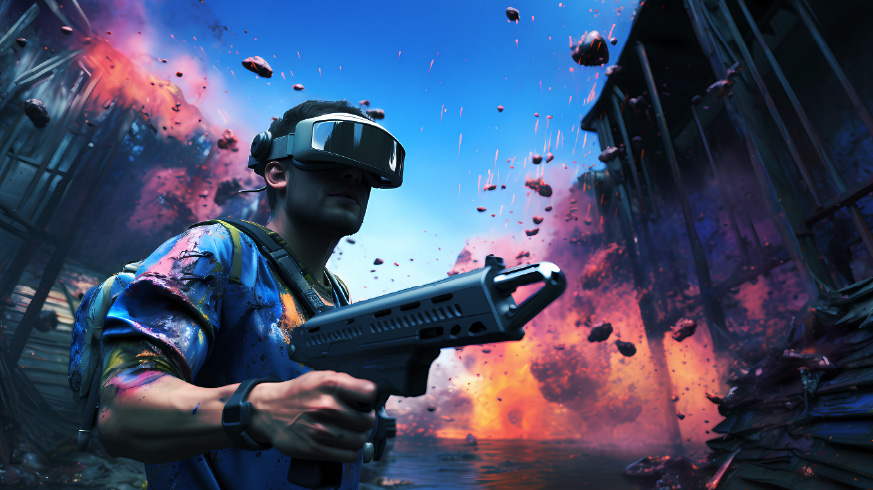
Let’s be honest—video games have come a long way from pixelated screens and basic commands. These days, it’s not just about graphics and gameplay mechanics. It’s about intelligence. Artificial Intelligence (AI) is reshaping the gaming experience, turning NPCs into lifelike companions, enemies into clever foes, and stories into dynamic, evolving experiences. But with hundreds of new games dropping every month, how do you know which AI-driven titles are actually worth your time? Whether you’re here for the strategy, the story, or simply looking for something fresh that doesn’t play like every other title, this guide will walk you through the best AI-powered video games that are changing the landscape—and why you need to dive into them now.
1. The Power of AI in Gaming: Why It Matters
AI in video games isn’t just some flashy tech gimmick—it’s the secret sauce behind smarter gameplay, adaptive environments, and truly immersive storytelling. Instead of predictable patterns, AI now enables characters to learn from your actions, environments to react in real-time, and plots to shift dynamically. The goal? To make every playthrough feel unique. If you’ve ever yelled at a game because an enemy felt “too smart,” chances are you’ve already met AI’s hand in action. But it’s not just about difficulty. It’s about depth, unpredictability, and realism. And honestly, once you’ve tasted AI-rich gameplay, going back to the old stuff feels like watching reruns of a show you’ve memorized.
2. Alien: Isolation – Where Fear Learns From You
We kick off with a horror game that doesn’t just scare—it studies you. In Alien: Isolation, the AI controlling the Xenomorph doesn’t follow a set path. It hunts. It listens. It learns your tactics. Think you can hide in the same locker twice? Not with this beast. This game isn’t about jump scares; it’s about tension that builds because the AI outsmarts you. Players quickly realize they’re not just playing a horror game—they’re surviving a living nightmare that adapts every time. The alien’s unpredictability, thanks to AI routines, makes each session thrillingly dreadful.
3. Middle-earth: Shadow of Mordor – The Nemesis System Redefined Enemies
What made Shadow of Mordor revolutionary wasn’t just the setting or story—it was the Nemesis System. Every enemy you encountered remembered your encounters. Beat a captain? He might return with a scar and a grudge. Lose to a grunt? He might climb the ranks and mock you next time. This dynamic interaction is powered entirely by AI, creating a world where actions have consequences far beyond just health bars. This game proved that even a simple sword fight could ripple into a saga of rivalry and redemption.
4. Red Dead Redemption 2 – A Living, Breathing World
You’ve probably heard how Red Dead Redemption 2 boasts one of the most immersive open worlds ever, but what truly sets it apart is the AI underpinning its ecosystem. Every NPC in the game has a daily routine, from shopkeepers to train passengers. They remember interactions—insult someone and they’ll act wary next time. Help someone, and they may return the favor later. The world doesn’t just exist—it lives. Hunting animals? They react realistically, and AI dictates behaviors like feeding, fleeing, or fighting. It’s not a world made for the player—it’s a world that would go on even without you.
5. F.E.A.R. – Tactical Terror With Smarter Enemies
First-person shooters often rely on brute force, but F.E.A.R. stands out because of its intelligent enemy AI. The soldiers flank, use cover, and communicate. You don’t get that classic “line up to die” enemy behavior here. Instead, you’re dealing with opponents who make you rethink your every move. It’s a tactical challenge, and AI is at the core of that sophistication. What’s even better? It’s not just hard—it’s fair. The AI doesn’t cheat; it just plays smart. And that makes all the difference.
6. Watch Dogs: Legion – AI Meets Procedural Gameplay
How do you make every character in a city playable without writing unique scripts for each? Procedural AI. In Watch Dogs: Legion, the entire city of London is populated by AI-generated personas. You can recruit a grandma, a punk, or an accountant, and each comes with unique skills and a backstory generated through AI. No two players will build the same resistance movement. This clever use of AI doesn’t just create variety—it personalizes your experience in ways never seen before.
7. The Poker Game That Thinks Like a Human
Let’s shift gears for a moment. While most qq online games offer standard AI opponents, some recent titles have introduced neural-network-powered adversaries that mimic real-world strategies. These AI bots don’t just follow logic—they bluff, bait, and adapt based on your betting patterns. If you’ve never tried a poker game that learns from you and uses psychology instead of just math, you’re in for a ride. In fact, several players report feeling like they’re playing against human minds rather than lines of code. That’s the power of evolving AI in card games—and it’s only getting better.
8. The AI Behind Your Favourite Slot Game
Slot games are often dismissed as luck-based time-passers, but advanced AI is now making waves even here. Some modern toto hk game platforms use machine learning to tailor experiences. How? By analyzing user behavior, favorite themes, and session lengths to dynamically adjust bonus rounds or reel interactions. While the core mechanics remain chance-based, the surrounding experience—rewards, themes, pacing—feels shockingly personal. And when a slot game manages to feel engaging every time you spin, it’s often thanks to adaptive AI tweaking the experience in real time.
9. The Last of Us Part II – Emotion, Stealth, and AI Drama
You can’t talk about AI in gaming without mentioning The Last of Us Part II. The game doesn’t just make enemies smarter—it makes them human. Enemies call each other by name, mourn when friends die, and change tactics mid-fight. Even the dogs have scent-tracking AI that pushes you to constantly adapt. It’s a brutal emotional and tactical landscape, but AI is what makes it feel so intimate. Every skirmish feels like a story, and that’s rare in a genre often focused purely on action.
10. Hitman 3 – Assassination With Endless AI Possibilities
The Hitman franchise has long been praised for its sandbox creativity, but Hitman 3 dials it up by creating NPCs that move with purpose. Guards investigate, waiters remember faces, and each map runs like a carefully orchestrated play where your role can shift every second. The fun part? It’s up to you to break the script. AI here isn’t just about reacting—it’s about setting a scene and letting players rewrite the narrative through clever (or chaotic) improvisation.
11. XCOM 2 – Turn-Based Tension Powered by Adaptive AI
Strategy fans know that XCOM 2 isn’t just about placing troops—it’s about anticipating an enemy that evolves. The alien AI doesn’t just charge; it flanks, retreats, adapts. As you improve your tactics, the enemies upgrade theirs too. The AI director even adjusts mission difficulty and layout based on how well you’re performing. The result? Every decision feels high-stakes. There’s no comfort zone. Just smart warfare, moment by moment.
12. Slot Game Worlds That Keep Players Coming Back
Returning to casual games, the evolution of slot game AI has also created interactive universes. Think of themed slots with evolving stories—pirate adventures, ancient temples, or futuristic cities. Behind these colorful spins is AI-driven narrative branching. Based on your interactions and time spent, you unlock unique story elements or bonus features others might never see. It’s no longer just about the reels—it’s about the journey. And yes, these narratives are personalized and dynamic, proving once again that AI isn’t reserved for hardcore titles alone.
13. AI in Indie Games – Small Studios, Big Brains
It’s not just AAA titles taking the AI leap. Indie games like Echo and Creatura are experimenting with adaptive environments and player-influenced world-building. In Echo, for example, the enemies are copies of you—literally learning from your actions and using your moves against you. You sprint? They sprint. You hide? They hide. It’s like fighting your shadow. Indie devs may have limited budgets, but with AI, they’re creating groundbreaking experiences that challenge even the giants.
14. What the Future Holds – Beyond the Code
We’re only scratching the surface of what AI can do. Future games are heading toward true personalization—where the story, difficulty, character relationships, and even dialogue adapt to your playstyle and personality. Developers are exploring AI-generated dialogue trees, real-time narrative pivots, and emotional resonance models. Imagine a game that knows when you’re bored and shifts pace or adds tension when you’re too relaxed. That’s where we’re headed—and it’s both exciting and a bit eerie.
Conclusion: AI is the Game-Changer We’ve Been Waiting For
AI-driven games aren’t just the future—they’re the present, redefining how we play, think, and experience virtual worlds. From intense survival horror to smart casual games like the newest slot game mechanics and poker game simulations that think on their feet, AI is quietly crafting richer, deeper, and more human gameplay. Whether you’re a seasoned gamer or just dipping your toes into the gaming pool, exploring these titles will not only entertain but give you a front-row seat to how far game design has come. So pick your game, load it up, and let AI blow your mind—one smart move at a time.